 Ask Millie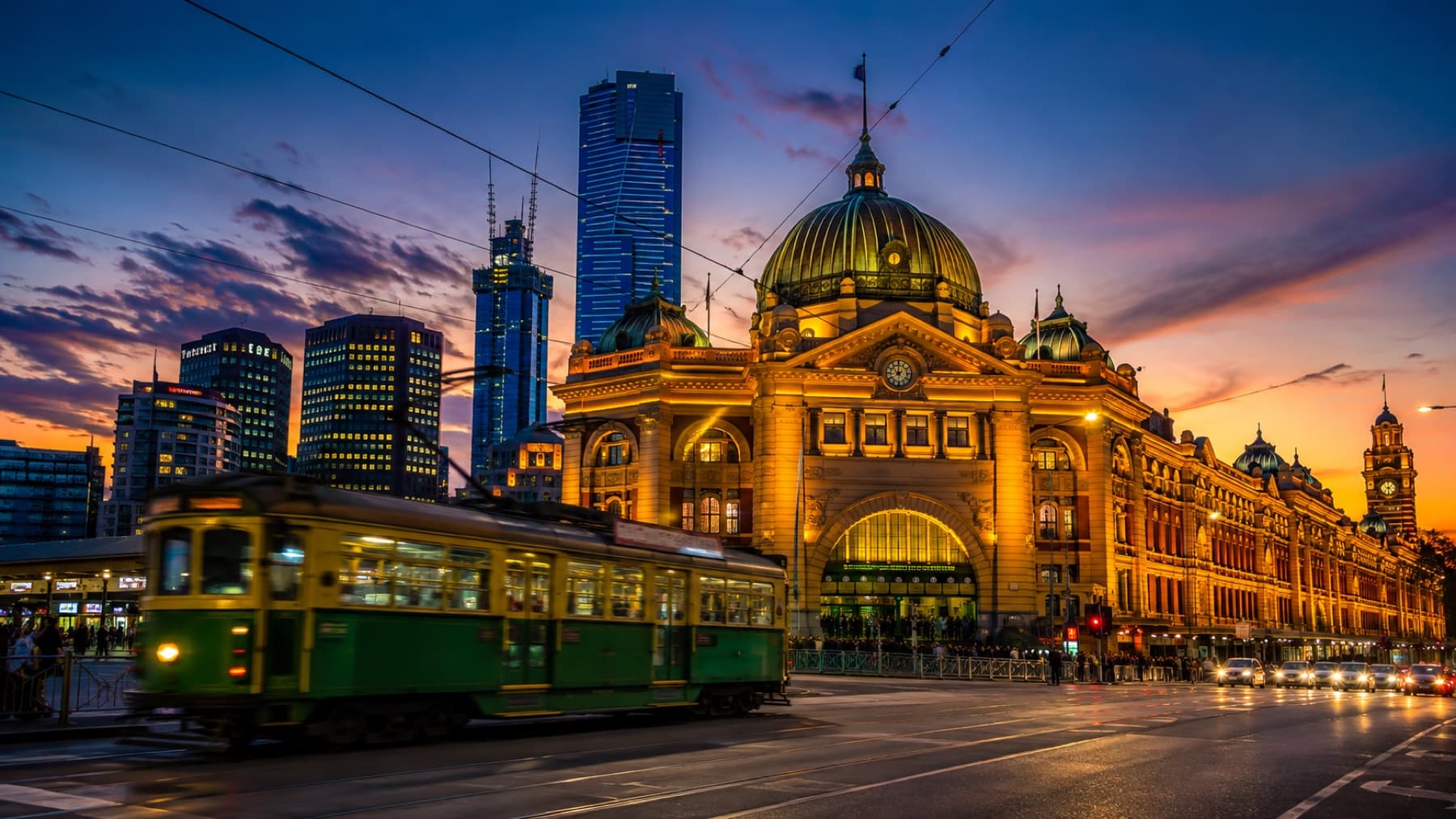
A grid so rigid it produced a maze.
Most people use the CBD the way you use a corridor — head down, between the station and wherever they're due. The city files that corridor under furniture. It deserves a day of its own.
In 1837 a surveyor named Robert Hoddle ruled Melbourne onto paper before most of it existed: a mile by half a mile, main streets ninety-nine feet wide, marching at right angles whether the land agreed or not. Between the grand streets he allowed narrow service lanes — back entrances for night carts and deliveries, never meant for the public. Then gold hit in the 1850s, the city got rich at indecent speed, and Victorians with money started roofing over the gaps between buildings to build shopping arcades like the ones they'd seen in London and Milan.
That's the whole trick of the place, and almost nobody says it out loud: the boulevards are where Melbourne performs, and the lanes are where it lives. Everything people love about this city — the espresso bar three stools wide, the basement bar with no sign, the bookshop up a stair — exists because a rigid colonial grid accidentally left it a service-lane shadow city to grow into. The CBD isn't a business district with some quirky lanes attached. It's two cities, interleaved, and the second one is mostly under cover.
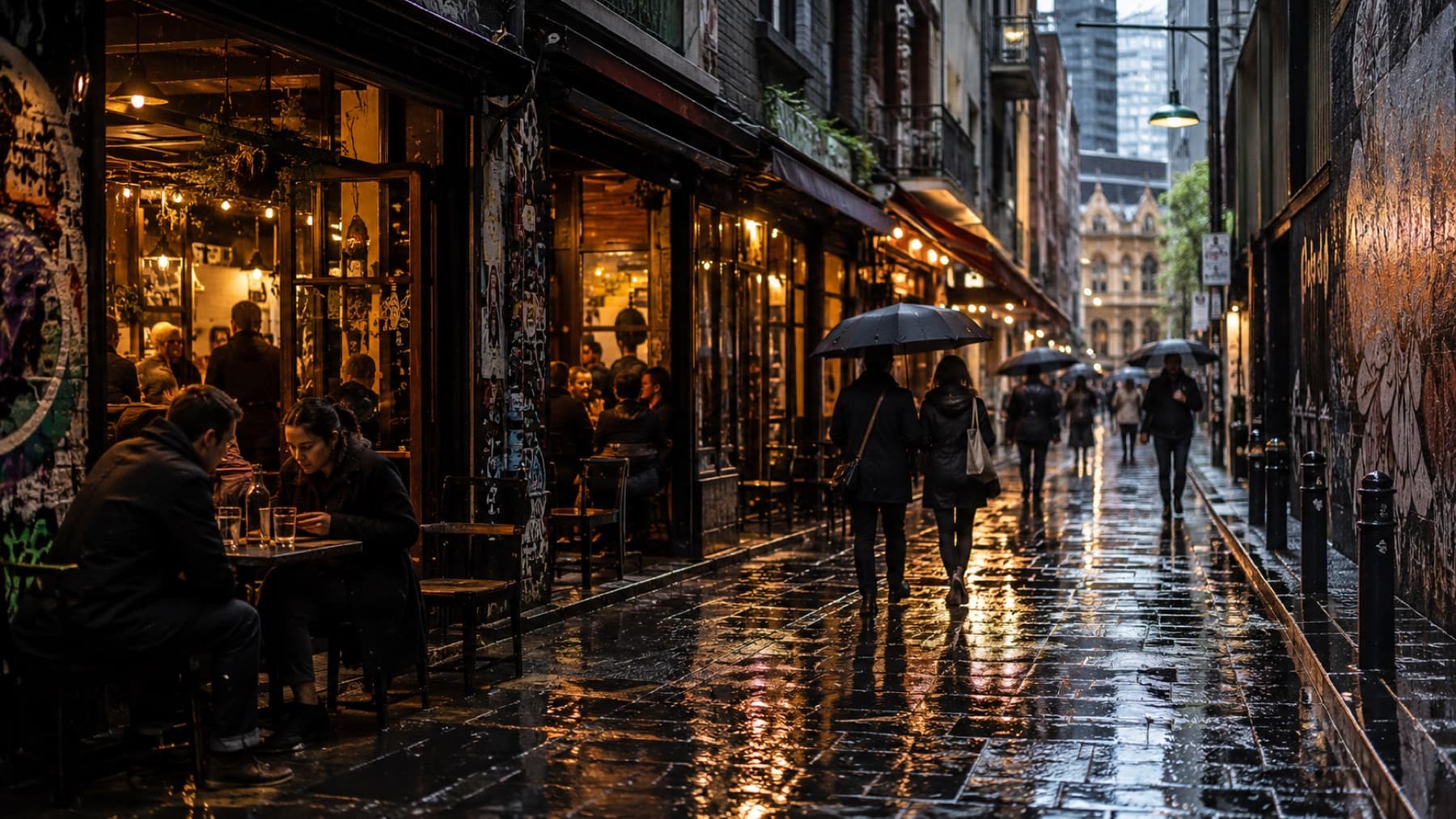
One spine, fifteen minutes, mostly roofed.
Every version of a CBD day in this guide starts at the same place: the steps of Flinders Street Station, under the clocks. Not because it's pretty — though the old dome is — but because it's where the lane network begins, and because “meet me under the clocks” has been the city's rendezvous for over a century. Stand with your back to the station. Everything in this guide is within a twenty-five minute walk of where you're standing, and most of it is within ten.
Cross Flinders Street and go straight up Degraves Street — café tables down both sides, barely room for the lane itself. At the top, jink right and then left and Degraves becomes Centre Place, scruffier and better: stickered walls, hole-in-the-wall kitchens, a covered arcade section that delivers you onto Collins Street. You've walked four minutes and you're already in a different city from the one the trams see.
Directly across Collins is the Block Arcade, finished in the early 1890s when Melbourne was briefly one of the richest cities on earth, and it shows: a mosaic floor you'll be tempted to photograph instead of walk on, a glass dome, and a tearoom window of cakes that has been stopping foot traffic for over a century. In the 1890s, “doing the Block” — promenading this stretch of Collins in your best clothes — was the thing one did. The arcade is the indoor half of that ritual, preserved.
Follow the arcade's dog-leg out onto Little Collins, cross the little street, and you're at the back door of the Royal Arcade — older again, open since 1870, the oldest arcade still standing in the country. Walk its length under the high glass roof and look up before you exit: Gog and Magog, two giant carved figures, have struck the hour beside Father Time since 1892. The arcade puts you out on Bourke Street Mall, in the thick of the retail city.
That's the spine: station, Degraves, Centre Place, Block, Royal, Mall. Fifteen minutes if you don't stop, half a day if you do it right. Learn it once and the CBD reorganises itself around it — every other place in this guide hangs off this line.
Wet-weather version: the spine runs further than most locals realise. From Bourke Street Mall, cut through Myer or David Jones and take the air bridges over Little Bourke into Emporium, then the bridge over Lonsdale into Melbourne Central. From the station steps to Melbourne Central — a kilometre of city — your total open-air exposure is a few street crossings, maybe ninety seconds of weather. This is why Melburnians look so calm in the rain.
The boulevards are where Melbourne performs. The lanes are where it lives.
Three great rooms, all of them free to enter.
Melbourne's gold money didn't just build arcades. It built public rooms on a scale that still feels slightly unreasonable, and the best of them ask nothing at the door.
The State Library & the dome
The State Library Victoria has held the Swanston and La Trobe corner since 1856 — twelve minutes' walk straight up Swanston from the station, or two exposed minutes across from Melbourne Central if it's raining. Walk in, no ticket, and head for the La Trobe Reading Room: an octagonal chamber under a dome that was among the largest of its kind in the world when it opened in 1913, with six storeys of book-lined balconies rising around the desks. Take the lift or stairs to the upper balconies and look down — students at the green-shaded lamps, the radial desks like spokes. Half the people down there are studying. The other half just needed somewhere magnificent to sit, which is precisely what the room is for. The lawn out the front, when the sun's out, is the city's unofficial common.
Fed Square's two galleries
Back at the river end, directly across from the station, Fed Square holds two institutions people routinely mix up. The Ian Potter Centre: NGV Australia is the Australian half of the National Gallery of Victoria — colonial painting through to contemporary work, with First Nations galleries that are reason enough to come on their own. General entry is free; the big international building on St Kilda Road is its sibling, not its twin, and a separate visit. Next door, ACMI is the museum of screen culture — film, television, games — and its permanent exhibition on the moving image is also free, genuinely good in the dark-room-full-of-wonder way, and the single most reliable two hours in the city when the sky has opened.
Judgement call: don't stack all three rooms in one day. One civic room plus the arcade spine plus a proper meal is a full, good day. Two galleries back-to-back is how people end up hating galleries.
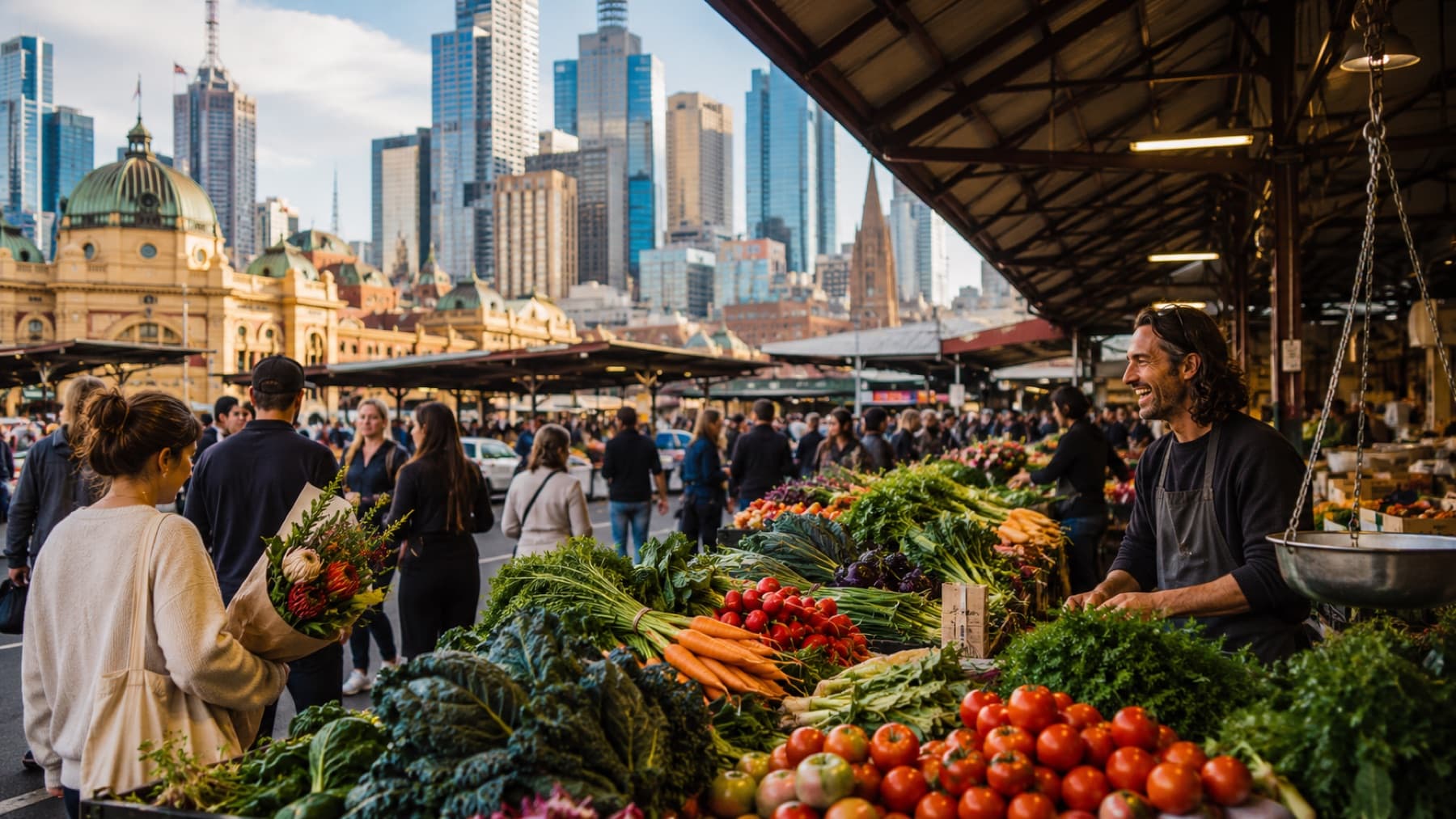
Queen Vic, early, on the right day.
The Queen Victoria Market sits at the grid's top corner — ten minutes' walk up Elizabeth Street from the State Library, or any tram running up Elizabeth if your legs object. It has traded on this site since 1878 and it remains a working market first and an attraction second, which is exactly why it's worth your morning. Go early, when the fruit-and-veg sheds are loud with trader call-and-response and the produce is still being argued over by people who cook for a living.
The route inside writes itself: start in the open sheds, then duck into the deli hall — a corridor of cheese, smallgoods and borek that smells like four migrations at once — and finish at the doughnut van that has been frying hot jam doughnuts on this site since the 1950s. The queue moves fast and the doughnuts do not survive the walk back. The meat and fish hall behind the deli aisle is the most honest theatre in Melbourne.
The day matters more than the hour. The market has traditionally closed two days a week — historically Mondays and Wednesdays — and runs seasonal night markets in winter and summer. Check the current week before you build a morning around it; turning up to closed sheds is a CBD rite of passage nobody needs twice.
Chinatown's long memory, Koreatown's new lane.
Chinatown runs along Little Bourke Street between Swanston and Spring, under the red gateway arches, and it has done so continuously since the 1850s gold rush — longer than almost any Chinatown anywhere outside Asia. It is not a precinct invented for visitors; it's a neighbourhood that simply never stopped. The main little street is the marquee, but the cross-lanes are the point: dumpling rooms up narrow stairs, barbecue shopfronts with the ducks in the window, kitchens that hit their stride after 10pm when the rest of the grid is yawning. Chinatown is the CBD's late-night safety net, and everyone who works in the city learns it eventually.
The newer chapter is at the other end of the grid. Healeys Lane, a skinny cut between Lonsdale and Little Lonsdale at the city's west end, was formally recognised as Melbourne's Koreatown in 2025 — a carved three-metre jangseung guardian post marks it — after years of Korean barbecue joints, stew houses, dessert cafés and karaoke rooms quietly making the lane their own. It runs late, it's built for groups, and it gives the legal end of town something it never had: a reason to stay past six.
And threaded through it all, the Italian layer at the top of Bourke — the “Paris end”, as the real-estate agents of the 1950s christened it. Pellegrini's has poured espresso under the same red sign since 1954: bar stools, a mirror, granita in summer, pasta from a pot, no table service and no apology. A few doors up, Florentino has been the city's occasion restaurant since 1928 — mural room upstairs, cellar bar at street level — and after decades in the Grossi family it changed hands in late 2025, so anything written about it before then describes a different management. Between those two doorways sits the entire span of what eating in this city can mean.
Don't pick a restaurant. Pick a register.
The CBD has too many venues for a list to mean anything by next month. What holds still is the geography of moods, so navigate by those instead.
Standing up, ten minutes: espresso at a lane window or at Pellegrini's bar. The CBD invented the Melbourne coffee stop and still does it with the least ceremony — Degraves and Centre Place at morning peak are the city's engine room.
Fast, solo, excellent: a bowl in Chinatown's stairway dumpling rooms or gimbap and stew off Healeys Lane. Counter seats, quick turnover, nobody minding that you're alone with your phone. This is the grid's native register — the CBD feeds more solo diners well than anywhere else in the country.
The long lunch: Flinders Lane and the top of Bourke are where the city goes when the afternoon is officially sacrificed. The lane end skews sharp and modern; the Paris end skews white-tablecloth and old-school. Book ahead for either — long lunches are one thing the city does plan.
After eleven: Chinatown. Always Chinatown. When the theatres empty and the kitchens elsewhere are stacking chairs, Little Bourke is still seating people, and the late bowl of noodles after a show is one of the oldest moves in the Melbourne playbook.
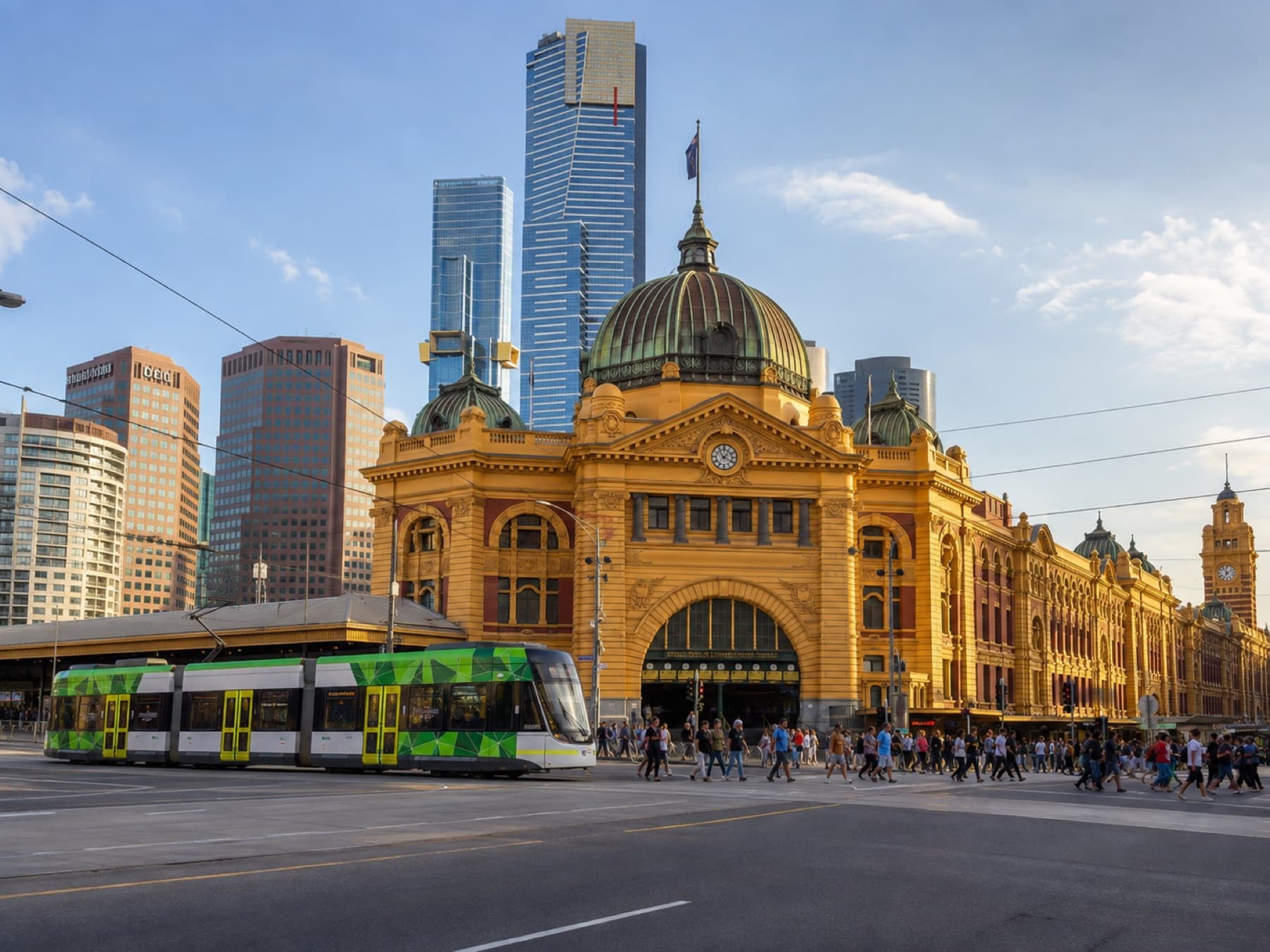
Same grid, different day.
The grid in finals week, and the Friday that stops it.
For most of September the CBD carries football the way it carries everything else — absorbed into the ordinary day, visible mainly in scarves on trams and a run on Chinatown tables before an afternoon match. The east end thickens on match days; the west end barely notices.
Then there is the Friday. Friday 25 September 2026 is a Victorian public holiday, the day before the Grand Final at the MCG. The Grand Final Parade runs that morning from Melbourne Park through Birrarung Marr and over the William Barak Bridge into Yarra Park, which puts a crowd along the river edge of the grid for several hours. Check the AFL for the start time; the route has held for years, the time moves.
What the holiday actually does to the city: the arcades and department stores trade, the big civic rooms mostly open, and the food that keeps going is Chinatown and the lanes rather than the office-lunch places, which shut with the offices. Expect a public holiday surcharge, expect a holiday timetable on trains and trams, and expect some of the small specialist shops to take the day. Queen Victoria Market keeps its own public holiday arrangements, so confirm the day before rather than walking up.
The practical read is a geographic one, which is what this guide is for. On that Friday, the east end and the river are the event. The west end of the grid — Healeys Lane, the Flagstaff side, the top of Little Bourke — is the same city with none of the crowd, and it is the best day of the year to have it to yourself. The fortnight also overlaps the Victorian spring school holidays, Saturday 19 September to Sunday 4 October, so the museums and the library run busy and family-shaped all through it.