← All guides

Guide · Your first camping trip

Your first camp, without the misery.

What to take, what to leave at the shop, five Victorian campgrounds that forgive a first attempt, and the things that actually go wrong.

Borrow the tent. Buy the mat.

Ask anything…
GuideFirst-timers11 min readChecked September 2026

Start here

Camping in Victoria is not difficult and it is not an expedition. The gap between people who camp and people who do not is almost never fitness or gear — it is that the first attempt went badly, usually for one of about five reasons, and all five are avoidable. This is the version of the advice a friend gives you in a car park, not the version the camping shop gives you at the counter.

The short form: borrow what you can, put the tent up at home once, book a campground that has a toilet block, arrive with daylight to spare and plan to do almost nothing. The wilderness will still be there on the third trip, when you have found out what you actually like.

At a glance

  • A tent you have already put up oncePut it up at home first. Everything else on this list is negotiable.
  • All the water you will drinkFour or five litres a person a day, carried in. There is usually no tap.
  • An itineraryOne campground, two nights, one walk. That is a complete first trip.

A tent you have already put up once

Borrow before you buy

The single best thing you can do before a first camping trip is put the tent up in a backyard or a lounge room.

You find the missing pole, the bent peg and the instructions that assume you have done this before, and you find them in daylight with a kettle nearby rather than at nine at night in a car park in the rain. Borrow a tent for the first trip if you can. Nobody should spend four hundred dollars to discover they do not enjoy sleeping on the ground.

Local tipCount the pegs before you leave. Take six spares and a mallet — the ground in most Victorian campgrounds is harder than it looks.
A sleeping mat, before a better sleeping bag

Buy this first

Cold comes up from the ground, not down from the air, and a mat fixes more bad nights than an expensive bag ever will.

A self-inflating mat or a decent foam one is the difference between sleeping and lying there doing arithmetic about how many hours are left. Pair it with any bag rated a little warmer than you think you need. If you are borrowing gear, borrow the mat first.

Local tipWear a beanie to bed. It looks ridiculous and it works.

Warm layers, in the plural

Ten degrees colder

Pack for ten degrees below the Melbourne forecast, because most of the good camping is well above the city and makes its own weather.

A February night on the Mount Buffalo plateau can drop to single figures while town stays warm. Thermals, a fleece, a windproof layer and a beanie take up almost no room and rescue a trip. Cotton is the one thing to leave behind — once it is wet it stays wet, and Victorian weather is very good at wet.

Worth knowingThe Cathedral Range, Mount Buffalo and anywhere near Bogong are all genuinely alpine at night, whatever the date says.

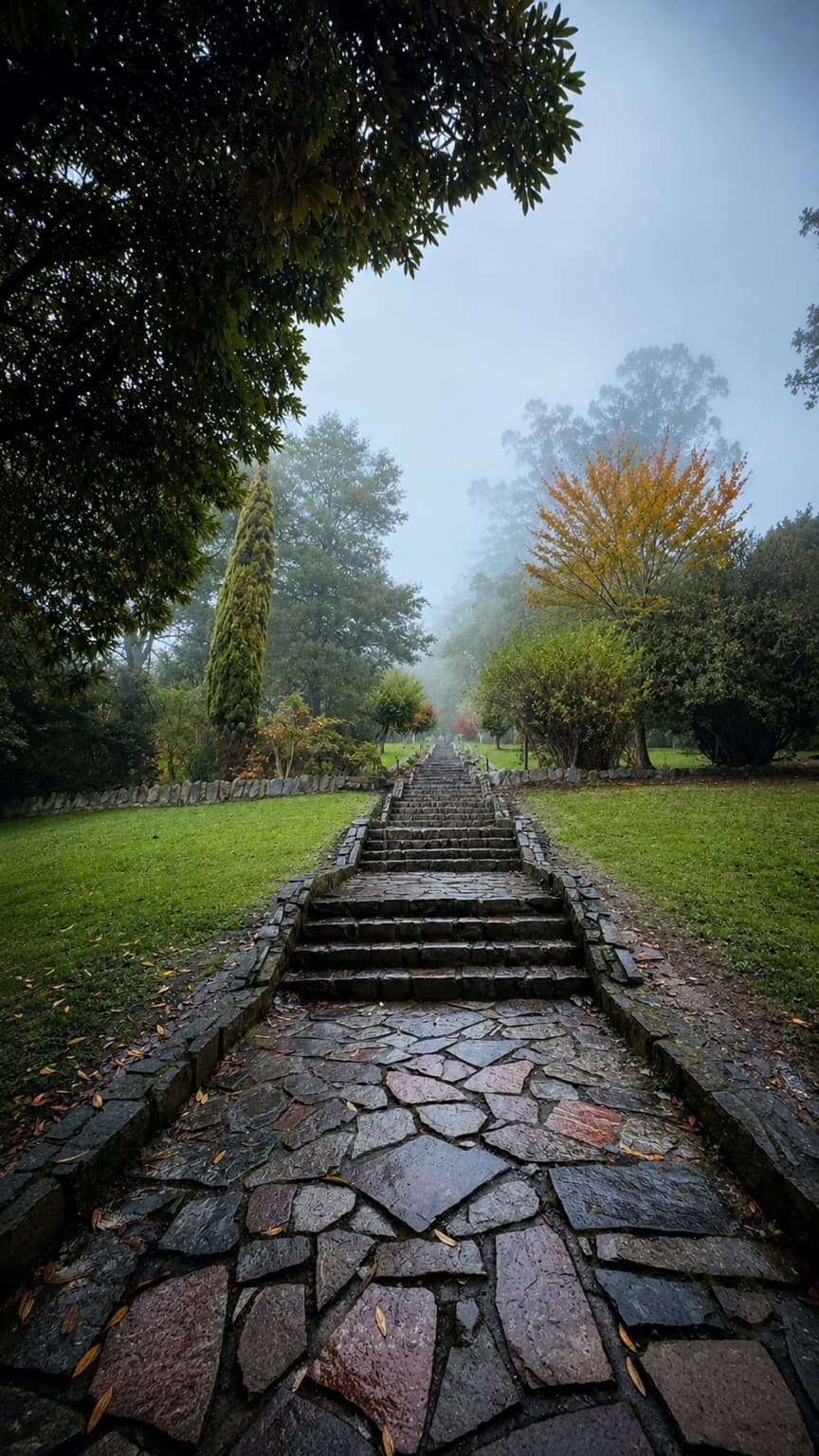
Wet stone steps leading up through misty gardens
Wet feet, no regrets.

All the water you will drink

4–5 litres a person a day

Most Victorian park campgrounds have no drinking water at all, and the ones that do are the exception rather than the standard.

Tank water where it exists is not a guaranteed supply, and creeks and rivers need treating. Four or five litres a person a day covers drinking, cooking and washing up. Carry it in proper containers, keep a spare in the boot, and never plan a trip on the assumption that there is a tap.

SkipDo not count on filling up at the campground. Fill up in the last town with a shop.

A gas stove and a head torch

Fire bans

A gas stove is the piece of gear that keeps working when the campfire is illegal, which in a Victorian summer is often.

Total fire bans are declared district by district and day by day and they override every fire ring in every campground. Wilsons Promontory bans fires all year regardless. A small gas stove means dinner happens either way. Take two head torches and spare batteries — camp cooking after dark with a phone torch in your teeth is a rite of passage nobody needs twice.

Local tipCheck the CFA the morning you leave, not the week before. The rating changes daily.

The full camp kitchen

Not on trip one

The camping aisle will sell you a table, a stand, a windbreak, a set of nesting cookware and a coffee press, and you will use two of them.

For a first weekend: one pot, one pan, a knife, a chopping board, plates, cutlery, a sponge and a rubbish bag. Plan meals that need one pot and no chopping on the first night, because the first night is the one where nothing is where you thought you packed it. Build the kit out over three or four trips instead, buying the thing you actually missed.

SkipSkip anything described as a camping version of something you already own. A normal saucepan works.

The bargain sleeping bag

Borrow instead

Cheap bags carry a temperature rating that is a marketing number rather than a promise, and a cold night ends first camping trips more often than rain does.

If the budget is tight, spend it on the mat and borrow the bag. If you are buying, look for a comfort rating rather than an extreme one, and assume you will want it warmer than the label suggests. Victorian nights are colder than the days let you believe, in every season.

Worth knowingA fleece liner or an old doona in the boot costs nothing and fixes the marginal night.

An itinerary

One thing a day

Two nights in one place beats three places in two nights, and setting up in the dark twice is how a first trip becomes the last one.

Pick one campground. Arrive with two hours of daylight left. Do one walk on the Saturday and nothing much on the Sunday. The pleasure of camping is largely the pleasure of having nowhere to be, and a schedule is the fastest way to remove it.

Local tipLeave Melbourne earlier than you want to. Friday afternoon traffic out of the city makes a liar of every drive time.

Boar Gully, Brisbane Ranges National Park

About 1.2h from the CBDCampgroundBook with Parks Victoria

Dry open forest on a ridge, gravelly ground, kangaroos through the sites at dusk and koalas in the manna gums if you look up long enough.

It is not dramatic country, which is exactly why it works as a first night out: quiet, flat, and close enough to town that a disaster is only an hour from home. Spring is the reason people come: the wildflowers through the Brisbane Ranges are among the best in the state. Summer here gets hot and the fire risk is real, so most locals go elsewhere between December and February.

Long-drop toilets and picnic tables. No drinking water, no showers, no bins — carry every litre you will drink and take the rubbish home.

Anakie Gorge is a twenty-minute drive away and makes an easy morning walk before you pack up.
Best for
First-timers · Families · Couples
Skip if
Anyone hoping for water views or a swim — the Brisbane Ranges are dry country and the creeks are seasonal.

BookingSites are booked through Parks Victoria online. It is small, so a long weekend goes early; a midweek night is usually there for the taking.

The Gums, Kinglake National Park

About 1.3h from the CBDCampgroundBook with Parks VictoriaConfirm before you drive

A small, simple set of sites in regrowth forest on the plateau.

The forest here is young because of the 2009 fires and the country still shows it, which gives the place a particular quiet. It is close, it is easy, and it is a sensible place to find out whether your gear works. Cool on the plateau even in summer. Winter is cold and wet and the campground can close after storms.

Toilets and fireplaces. No drinking water, no showers, no bins.

Masons Falls is a fifteen-minute drive and takes about twenty minutes to walk — the easiest waterfall payoff of any camp this close to town.
Best for
First-timers · Families · Couples
Skip if
People wanting a river or a view — this is forest camping, and the views are a short drive away at the escarpment lookouts.

BookingParks Victoria online. Small, so weekends go, but midweek is usually open.

Fraser Campground, Lake Eildon National Park

About 2.2h from the CBDCampgroundBook with Parks Victoria

Grassy terraces above the water with big gums, a swimming beach below and kangaroos that treat the place as theirs.

It is the most set-up camping in the park and the reason families come back every January: kids can be sent to the water and be visible the whole time. Summer is the season and the lake is warm enough to swim. Water levels drop through autumn, so the beach walks further out as the year goes on.

Flush toilets, hot showers and drinking water, which is unusual for a national park campground in Victoria and is precisely why it suits a first family trip.

The lake is a working water storage, so the shoreline moves. What was a beach at Easter can be a long walk down at Christmas.
Best for
Families · First-timers
Skip if
Anyone after solitude in January, when it runs at capacity.

BookingParks Victoria online. Christmas and January are allocated a long way ahead — think months, not weeks.

Cooks Mill, Cathedral Range State Park

About 2h from the CBDCampgroundBook with Parks Victoria

Flat grassy sites along the Little River with the razorback ridge of the Cathedral Range standing straight up behind you.

It is the biggest and most organised campground in the park, which makes it the one that suits a family or a first tent, and the walks start from the site rather than a drive away. Autumn and spring are ideal. Summer on the exposed ridge is punishing and the park closes on days of extreme fire danger; winter is cold and the rock gets slick.

Long-drop toilets, picnic tables and fireplaces. No drinking water, no showers, no bins — the river is not a supply.

Sugarloaf Peak by the Canyon Track is the walk people talk about, and it is steeper and more exposed than the sign suggests. Start early, take water, and turn around if the weather closes in.
Best for
Families · First-timers · Couples
Skip if
Anyone expecting an easy stroll — every walk from here goes up, and the Razorback is a genuine scramble.

BookingBooked through Parks Victoria online. Weekends between September and April go months ahead, especially the long weekends.

Buchan Caves Reserve

About 4.5h from the CBDCabins and campingBook with Parks Victoria

A green grassy reserve in a limestone valley, with lyrebirds in the gullies, a spring-fed pool and two guided cave systems in the hill above the campground.

It is the softest introduction to remote-feeling Victoria there is: you are a long way east, but there is hot water and a kiosk. Caves are the same temperature year round, which makes this one of the few Victorian trips that works in a heatwave or a cold snap. The valley itself is best in spring and autumn.

Flush toilets, hot showers, drinking water, powered sites and cabins. Close to a full-service campground by Victorian standards.

Book the cave tour when you book the site. In holidays the tours sell out while you are still putting the tent up.
Best for
Families · First-timers · Couples
Skip if
Anyone chasing solitude in school holidays — it is the anchor of the whole district.

BookingCamp sites, cabins and safari-style tents are booked through Parks Victoria, and cave tours are booked separately on the day or ahead.

Arriving after dark

The most common one

Almost every difficult first trip starts with a late departure and ends with a tent going up by phone torch on unfamiliar ground.

Give yourself two hours of daylight at the campground. That covers the wrong turn, the unsealed road that is slower than the map thinks, and the twenty minutes of walking around deciding where the tent goes. If you are running late, stop earlier — there is almost always somewhere closer.

SkipDo not drive unfamiliar gravel descents in the dark. Lerderderg, the Howqua and Johanna are all worse at night than they look by day.

The booking you cannot open

Screenshot it

Phone signal stops roughly where the good camping starts, and a confirmation email you cannot load is the same as no booking at all.

Screenshot the booking, download the offline map, and tell somebody at home which campground you are in and when you expect to be back. Past Halls Gap, inside the Prom, down the Otway valleys and anywhere in the Alpine park, assume no coverage and plan as if the phone is a camera.

Worth knowingWrite the park office number down on paper before you leave. It is the one number worth having when the phone is a brick.

Turning up to a free camp on a long weekend

Book, or go midweek

Free camps in state forests and along the rivers take no bookings, which is generous on a Tuesday and a lottery on the Saturday of a long weekend.

If the dates are fixed and the trip matters, book a Parks Victoria site. If you want the free camp, go midweek or arrive by early Friday afternoon. Have a second option written down before you leave, because driving another hour to a full campground in the dark is how a weekend unravels.

BookingAnything coastal in summer wants booking months ahead, and Tidal River at the Prom is a ballot rather than a booking.

Weather that was fine in Melbourne

Check the local forecast

The forecast for the city tells you very little about a plateau at 1300 metres or a valley that holds cold air all night.

Check the Bureau forecast for the nearest town to the park, not for Melbourne, and read the wind as carefully as the temperature. On the coast, peg everything properly when you arrive rather than after dinner — the wind at Aire River and Johanna gets up in the evening and finds every weakness in cheap gear.

Worth knowingA cool change reaches the coast first, the city next and the high country hours later. Inland you get more heat than the city does, later in the day.

Wildlife in the food bag

Everything in the car

Wombats at the Prom, possums in the ranges and ravens everywhere treat an unattended food box as an invitation.

Everything edible goes into the car overnight, including the toothpaste, the rubbish bag and the dog food if you are somewhere dogs are allowed. A wombat will make a door in a tent floor if it can smell the muesli bars, and they are extremely strong. Snakes are active from about September to April: boots and long socks in grass, look before stepping over a log, keep the tent zipped.

SkipNever feed anything. It ends badly for the animal and eventually for the campground.

Never done it before?

Tell me the weekend and who is coming. I will pick one campground with a toilet block, tell you how it is booked and what the nights will be like.

Plan a first trip