 Ask Millie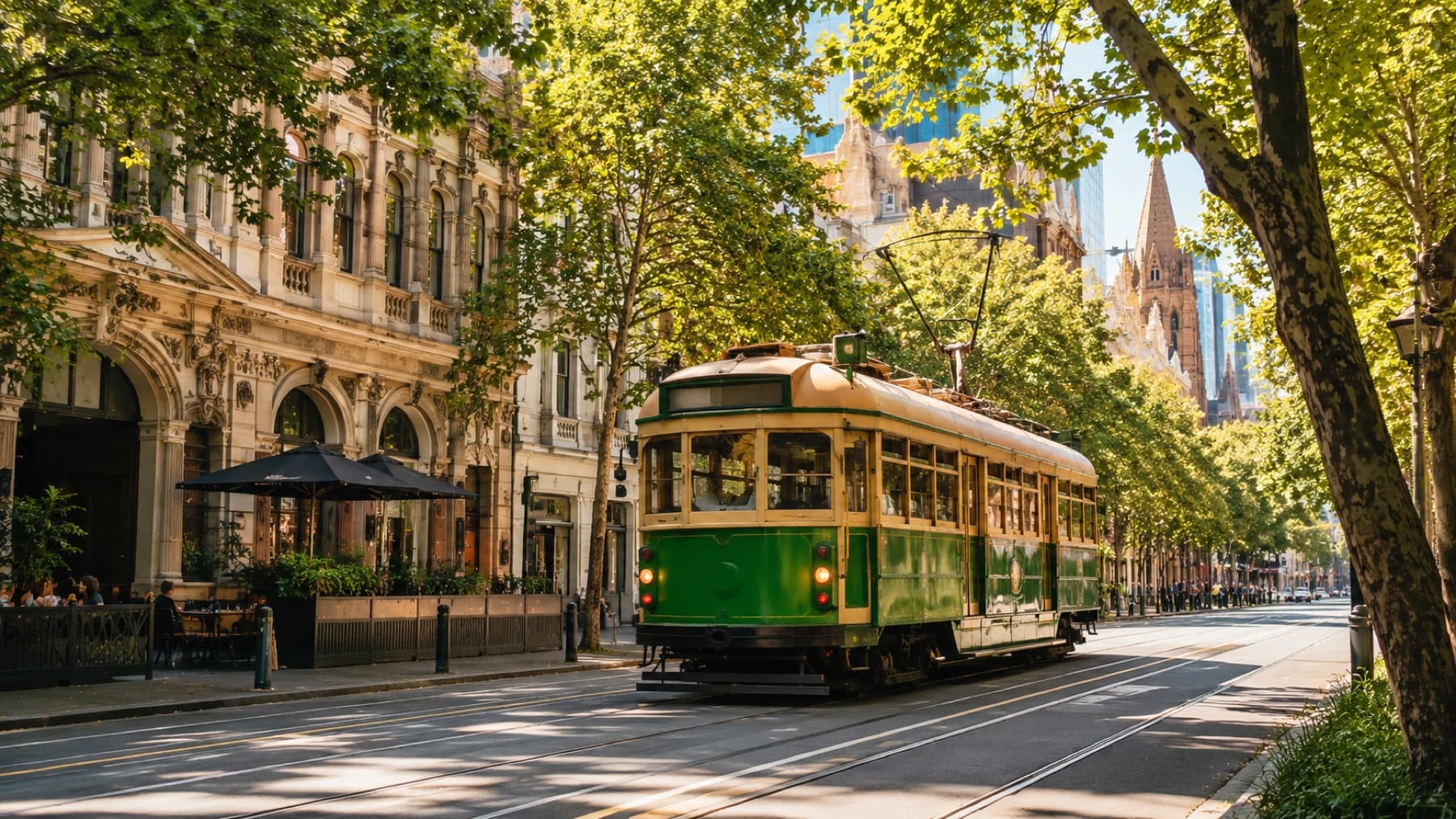
Melbourne has the largest tram network in the world and behaves as though this is unremarkable. Nobody explains it to you. You are simply expected to work it out by watching, which is how most of the rules here get transmitted.
Start with the money, because it is the one that catches people. The Free Tram Zone covers the CBD, Docklands, the Queen Victoria Market and the sports precinct end of Flinders Street. Inside it you do not touch on at all. Outside it you touch on with a Myki, and — this is the part that costs people money — you do not touch off on a tram. Touching off on a tram either does nothing or charges you again. Trains and buses are different. Trams are not.
Doors, and the geometry of standing
Board through any door. Get off through the doors nearest you, not the ones you came in. The tram is not a plane and there is no front.
The rule people break constantly: if you are getting off at the next stop, move toward the door before it arrives. The doors do not stay open long, and the person who realises at the last second and pushes through five people is the one everyone silently judges. If you are standing near a door and not getting off, step off onto the footpath, let people out, get back on. This is normal and nobody will take your spot.
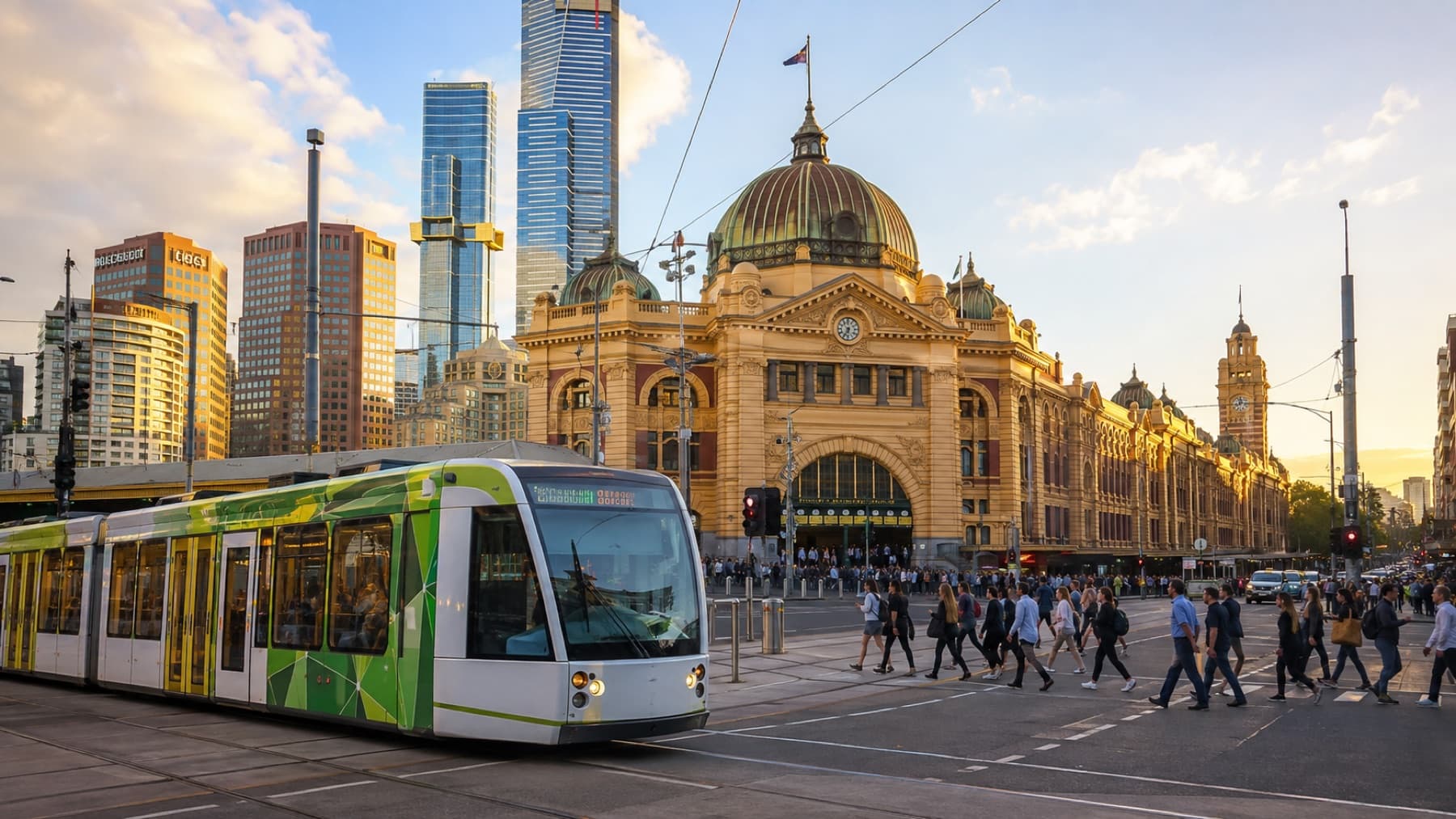
Step off, let them out, get back on. Nobody will take your spot.
Do not stand in the articulated middle section if the tram is filling, and do not stand at the top of the steps on the older high-floor trams. Move down. The single most useful thing you can do on a busy tram is take one more step inward than you feel like taking.
The things nobody says out loud
The seats near the doors are priority seats and people do actually give them up here, usually without being asked and without making it a moment. If you are sitting in one and someone who needs it gets on, stand before it becomes a conversation.
Do not eat anything with a smell. Coffee is fine. Chips are not. Phone calls on speaker are the closest thing this city has to a public offence.
When the tram stops in the middle of the road and there is no platform, the traffic beside you is legally required to stop. It usually does. Look anyway, especially on Sydney Road and Nicholson Street, and step down looking right.
Two things worth knowing
The City Circle tram, the burgundy one, is free and slow and loops the edge of the grid. Locals do not use it and visitors love it, and both of those things are correct. It is a sightseeing tram with a tram number.
And on a route with a long straight run — the 96 down to St Kilda, the 11 up to Preston, the 16 along St Kilda Road — the tram is a better way to see how the city changes than anything you will pay for. Sit on the left going out of town in the afternoon so the sun is behind you, and give it forty minutes. The suburbs sort themselves into eras as you go.