 Ask Millie
The line about four seasons in one day is repeated so often that it has stopped meaning anything. What actually happens is more specific and much more useful to know.
Melbourne sits where hot dry air off the inland meets cold air coming up from the Southern Ocean. On a hot day, a northerly wind drags desert heat down over the city. Then a cold front crosses from the west, the wind swings hard to the south-west, and the temperature drops — sometimes ten degrees, sometimes more, often within half an hour. That swing is the cool change. It is not a metaphor. It is a front with a time attached, and the Bureau will usually give you that time to within an hour or two.
What it feels like
You can feel it coming before you see it. The northerly gets aggressive and dusty, the light goes slightly yellow, and there is a particular stillness for a few minutes. Then the wind reverses. If you are outdoors and facing north you will feel the change hit your back. There is often rain in the front — sometimes a lot in ten minutes, sometimes none at all — and behind it the sky clears into that scrubbed, bright, cold blue that is the most Melbourne weather there is.
A 38 degree day with a 4pm change is two different days wearing the same date.
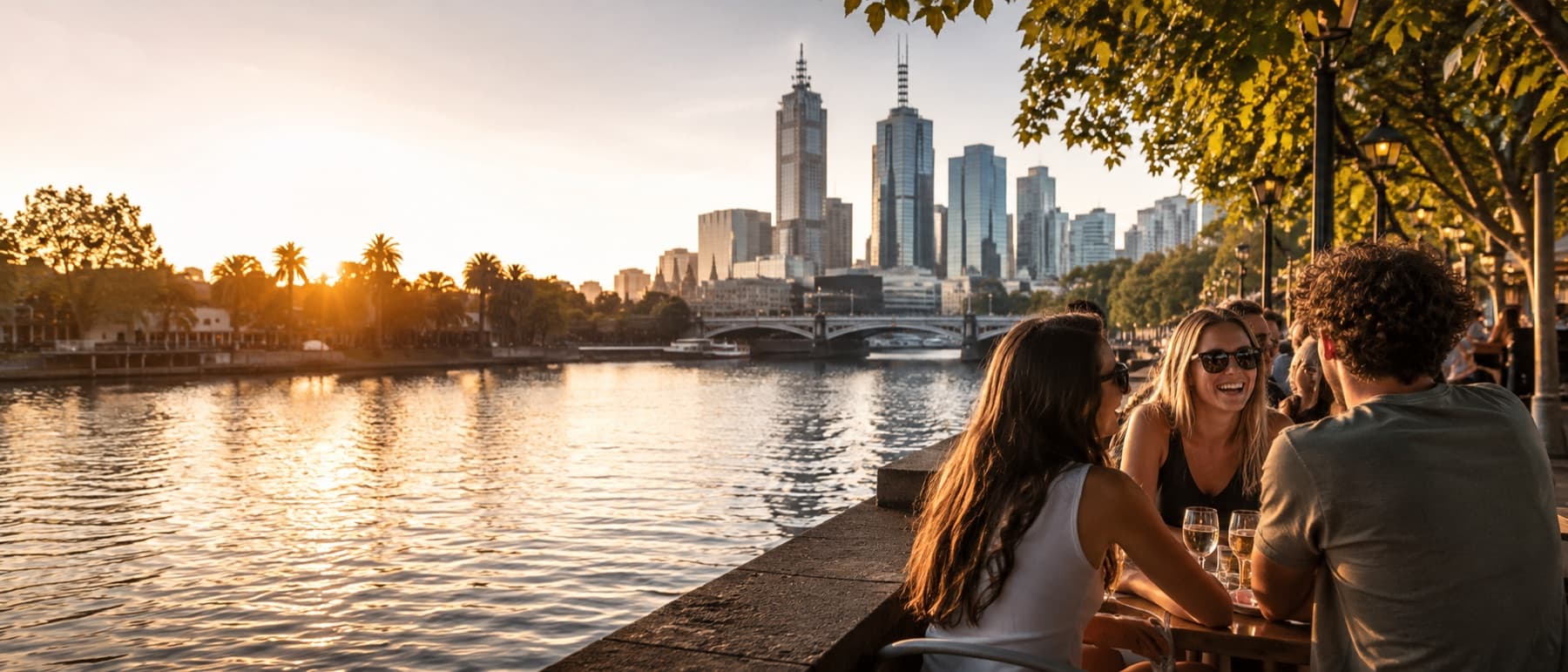
The important consequence: a 38 degree day with a 4pm change is two different days wearing the same date. The forecast maximum tells you almost nothing about the evening. This is why locals ask what time the change is coming rather than what the temperature will be, and why nobody here trusts a single number.
How to actually plan around it
Look up the timing, not the maximum. The Bureau of Meteorology forecast for Melbourne gives you the wind direction change, which is the real signal. Once you know the hour, you can build a day around it instead of being ambushed by it.
On a hot day with an afternoon change, do the outdoor thing early and hard. Beach, garden, market, walk — all of it before two. Then put something indoors and unhurried on the other side of the change: a long lunch that becomes a late one, a gallery, a bar with a door you can shut. The change is what makes the evening good, so plan an evening.
On a hot day with an overnight change, the opposite. The evening is the hardest part and the outdoor seating you booked will be miserable at seven. Eat somewhere with air conditioning and go to the beach the next morning, which will be perfect and empty.
Carry the layer. Not a joke, not a cliche — the same afternoon that started at 34 can finish at 17, and the city is full of people who committed to a single outfit at nine in the morning and regretted it by six.
And the summer version worth taking seriously: the change often arrives with strong wind, and on a bad fire day it is the wind swing that matters most in the country. If your plan is regional and the day is hot and windy, check the VicEmergency warnings for the area before you go, not after you arrive.