← All guides

Field Guide · Late September

Grand Final week, explained.

You have arrived in the last week of September, the offices are shut on a Friday for no reason you can find, and everyone is wearing a scarf indoors. Here is what is happening to you.

You do not have to care. You do have to plan.

Plan my Grand Final week Jump to day by day

Ask anything…
Visitor guideMelbourne · the last week of September11 min readWritten September 2026

Start here

One football match, and a city that arranges its year around it.

Melbourne does not treat the AFL Grand Final as a sporting fixture. It treats it as a public occasion — closer to a national day than a final — and for one week the ordinary rules of the city are suspended.

The competition is Australian rules football, invented here in the 1850s, played nowhere else in the world at this scale, and followed in Melbourne with a seriousness that has very little to do with athletics. Eighteen clubs, most of them descended from a specific suburb, play from March to August. Eight go into a finals series in September. Two survive it. Those two meet once, on a Saturday afternoon at the Melbourne Cricket Ground, and one of them wins everything.

In 2026 that Saturday is Saturday 26 September, because the Victorian public holiday for the Friday before it is Friday 25 September — the only state in the country that stops work for a game it is not even playing in. Everything in this guide hangs off those two days.

What makes the week strange for a visitor is that the object of all the attention is unknown until the last minute. The two teams are decided by the preliminary finals on the weekend before Grand Final week, which is why the merchandise appears overnight, the flights from Perth and Adelaide sell out in a day, and half the pubs in the city change their bookings policy on a Sunday night. Nobody is being disorganised. It genuinely cannot be planned earlier than that.

So this guide names no clubs, and it will not tell you who is playing. It tells you what the week does to the city, what is open, where people actually watch, and what a newcomer should do with the three quietest hours Melbourne has all year.

The five-line version

Friday is a public holiday

Friday 25 September in 2026. Offices, schools and banks closed; shops, cafés and galleries open, usually with a surcharge on the bill.

The game is Saturday afternoon

At the MCG, which everyone calls “the G”. The AFL confirms the start time closer to the day.

Assume you are not getting a ticket.

Almost the whole ground is spoken for by members. Watch it somewhere else and enjoy it more.

The city is full.

Hotels, restaurants and interstate flights are all tighter than usual for the whole week.

During the match the city empties.

If football is not your thing, that is the window. Use it.

The week, day by day. What it actually feels like.

  1. MondayThe medal nightThe season’s best-player award is decided at a black-tie count on Monday night and televised for hours. The city watches it in pubs and living rooms. Restaurants are quiet.
  2. Tue–WedThe buildScarves appear on trams. Shopfronts change colour. Two ordinary work days with a strange amount of talking in them. The best two days of the week to do normal tourist things.
  3. ThursdayThe city fillsInterstate arrivals land, hotels tighten, the CBD gets loud early. Book anything you want to eat at from here on, and expect the airport road to be slow.
  4. FridayPublic holidayHoliday, parade, long lunchOffices shut, the parade runs late morning, and the rest of the day is one enormous afternoon in a beer garden. Trams are packed; walking is faster in the middle of town.
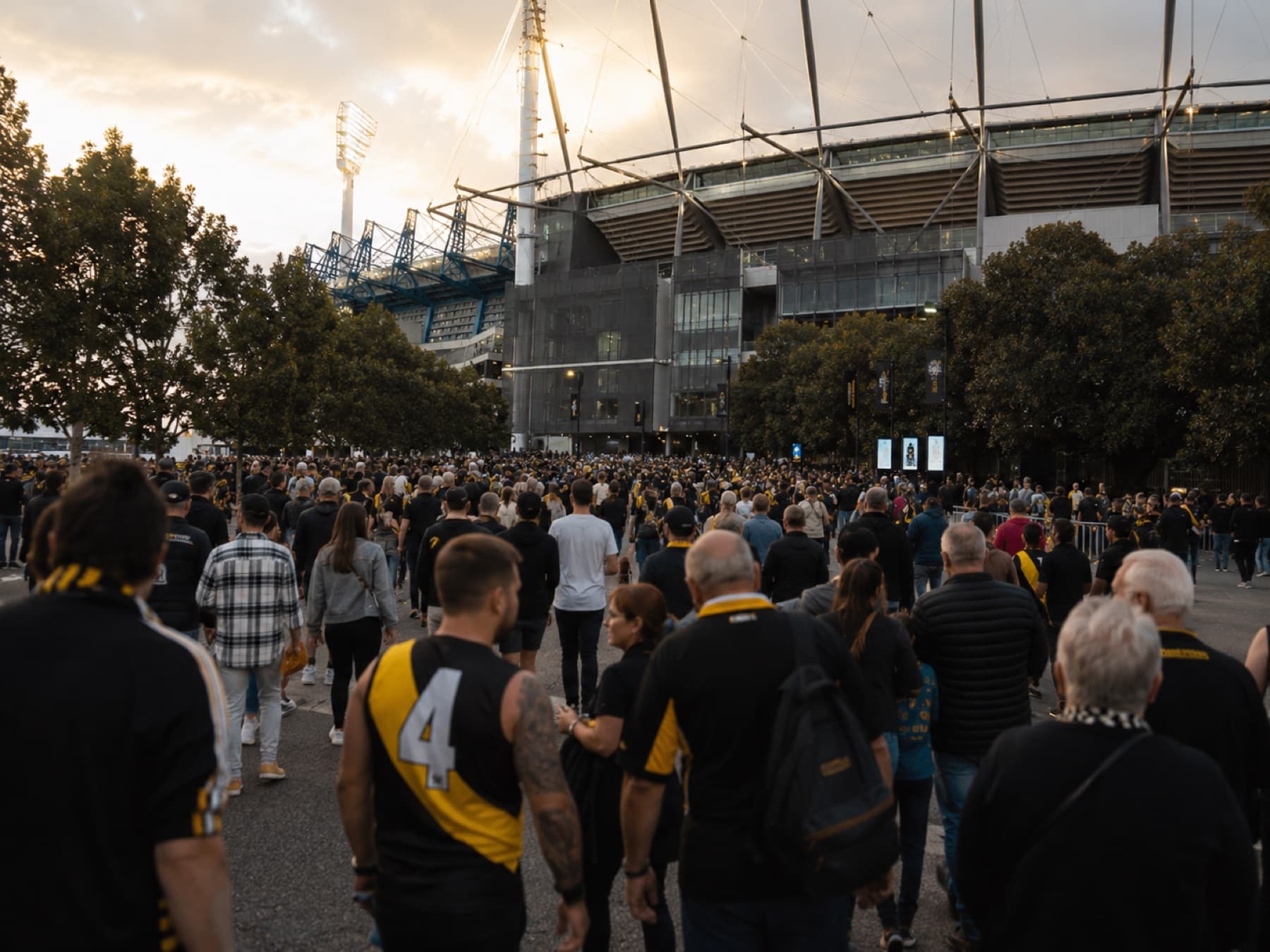
  5. SaturdayThe gameSlow morning, the whole city moving in one direction by lunchtime, then three hours of near silence outdoors, then noise everywhere at once. Getting anywhere near the ground after the siren is hopeless.
  6. SundayThe flat dayMelbourne’s quietest hangover. Half the city is delighted, half is not speaking, and everyone is walking slowly. A good day for the coast, a bakery, and no plans at all.
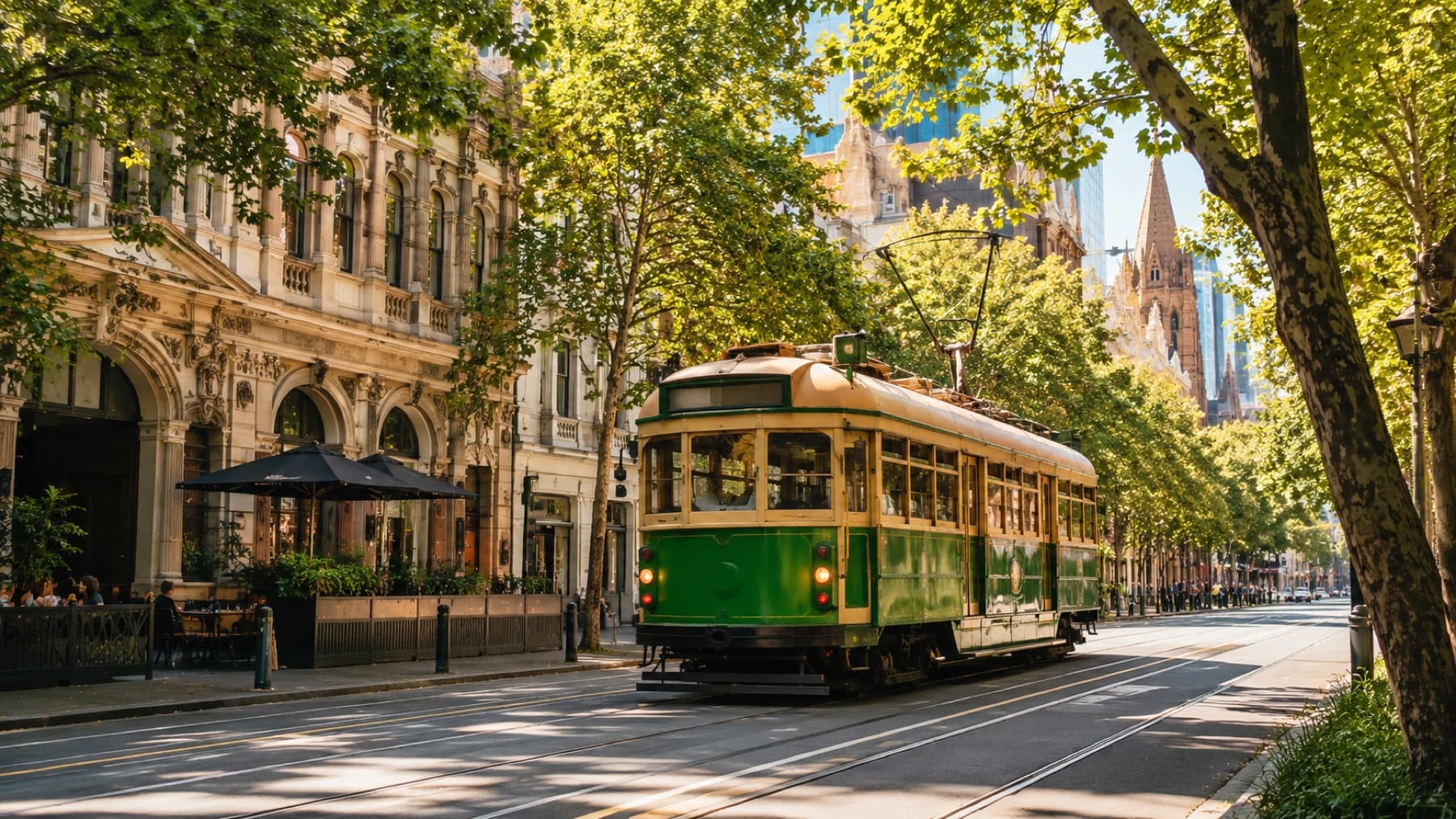
A heritage tram under plane trees on a city street

Why the city stops

It is not really about the football.

Melbourne is a city of transplants that has spent a hundred and seventy years arguing about which suburb you are from, and the football is the argument. Clubs began as neighbourhoods — the factory end of town, the wealthy end, the migrant end — and the allegiances were inherited before anyone chose them. People here do not pick a team. They are told which one they support, usually before they can read, and they carry it for life whether it rewards them or not.

That is why the week works on people who have not watched a match all season. The Grand Final is the one day the whole argument is settled in public, in front of about a hundred thousand people at the ground and most of the country on television. Even the neutral turn it on. Even the people who complain about it turn it on.

The other thing worth knowing: the match is played at the MCG under a long-standing agreement that keeps it in Melbourne. It does not travel. Every other code in Australia moves its showpiece around the country; this one has stayed in the same paddock for a century, and the city is quietly, insufferably pleased about that.

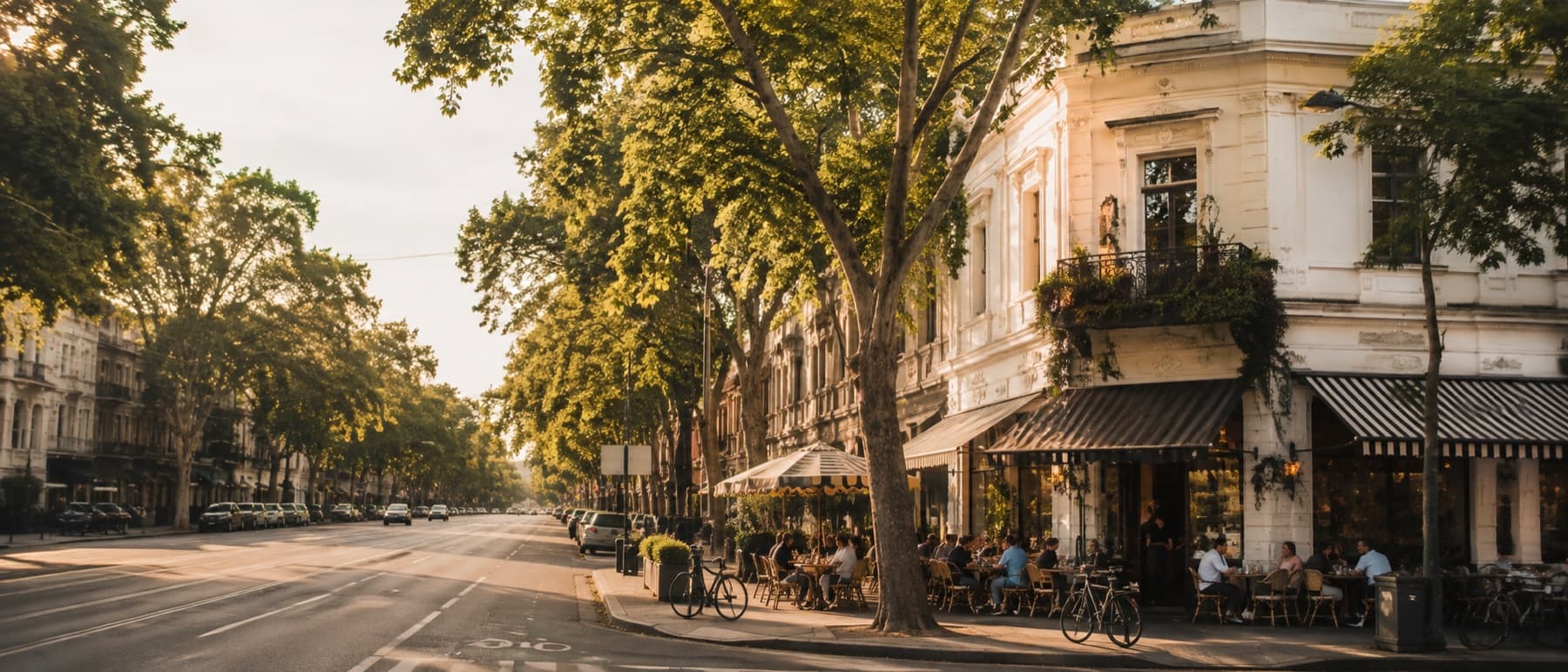
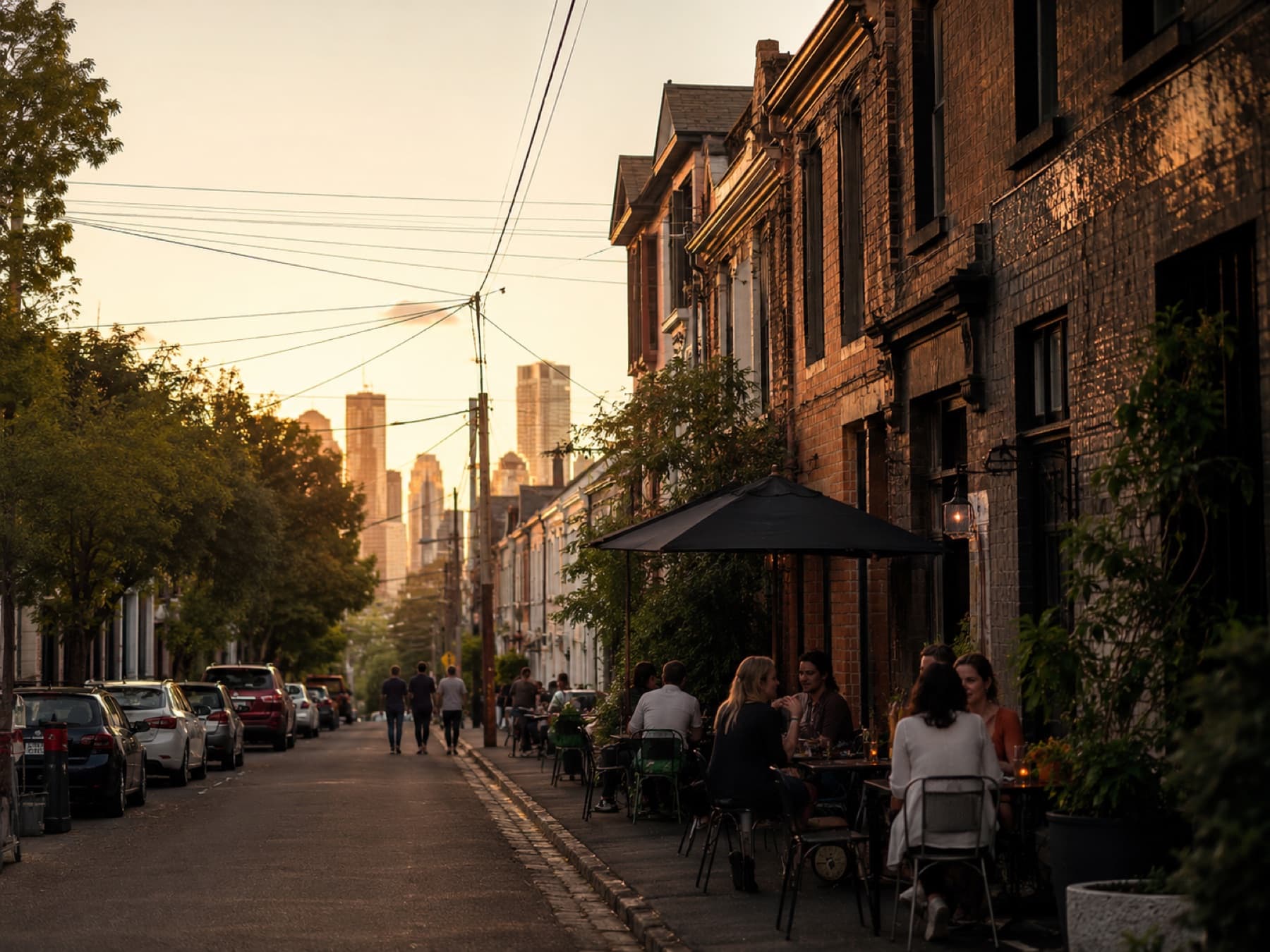
A corner café under plane trees in morning light

The Friday only Victoria gets

A public holiday for the day before a game.

Since 2015 the Friday before the Grand Final has been a full public holiday in Victoria and nowhere else in Australia. It is still argued about every year — it is a holiday for a sporting event, granted to a state where most people are not going to the event — and it is still, reliably, taken.

What is closed: offices, schools, banks, government services, medical practices that keep business hours, and anything that treats a public holiday as a public holiday.

What is open: almost everything a visitor wants. It is not a restricted trading day like Good Friday or Christmas, so shops, supermarkets, cafés, bars, galleries and museums trade normally. Expect a public holiday surcharge added to hospitality bills — it is legal, it is disclosed, and it is not personal.

What changes underneath: public transport runs to a holiday timetable, which is thinner than a weekday and awkward if you have an early train to catch. Check the PTV app the night before rather than assuming. Parking restrictions in the city and around the ground also change for the week, and the signs are the only authority worth trusting.

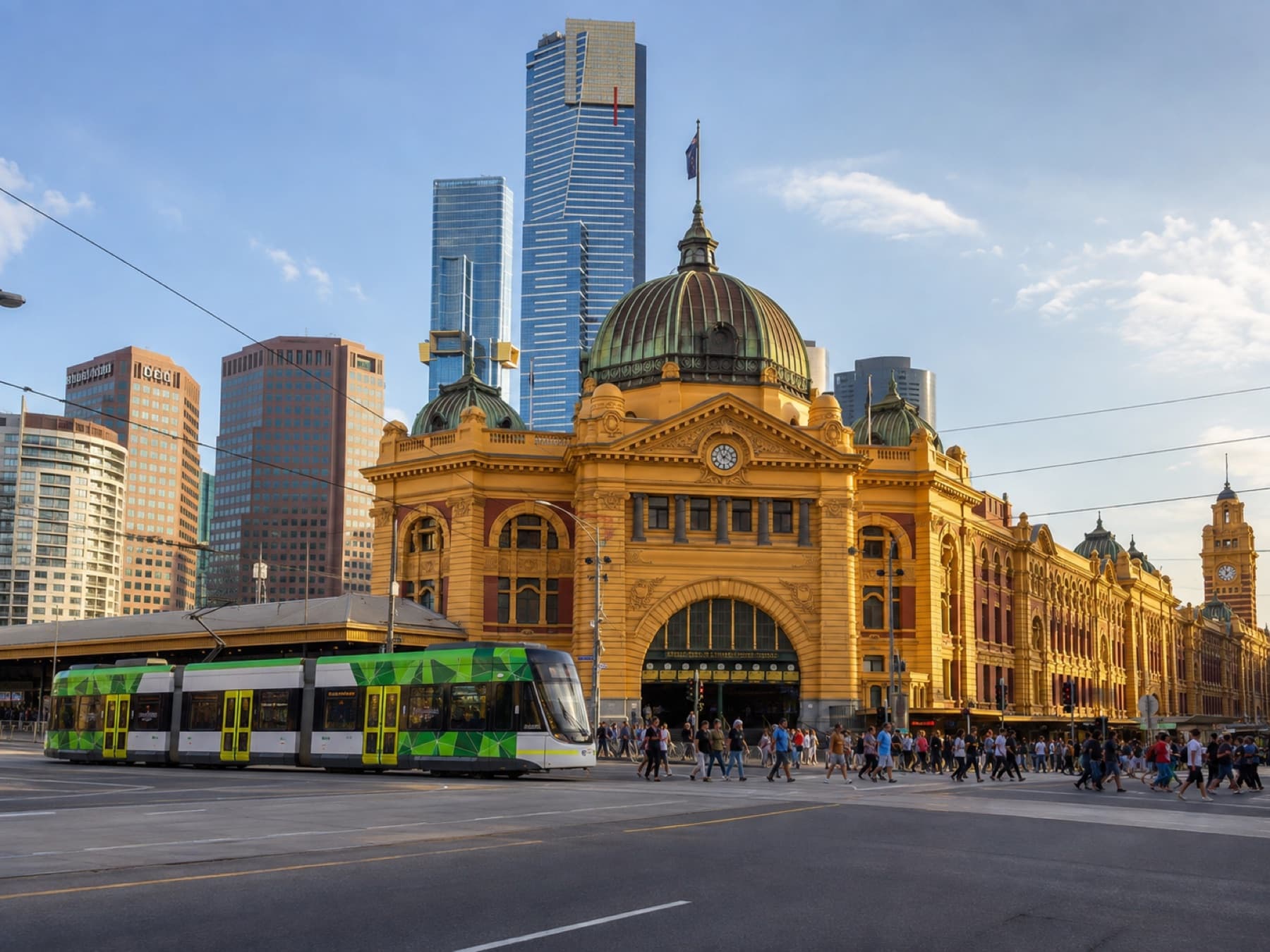
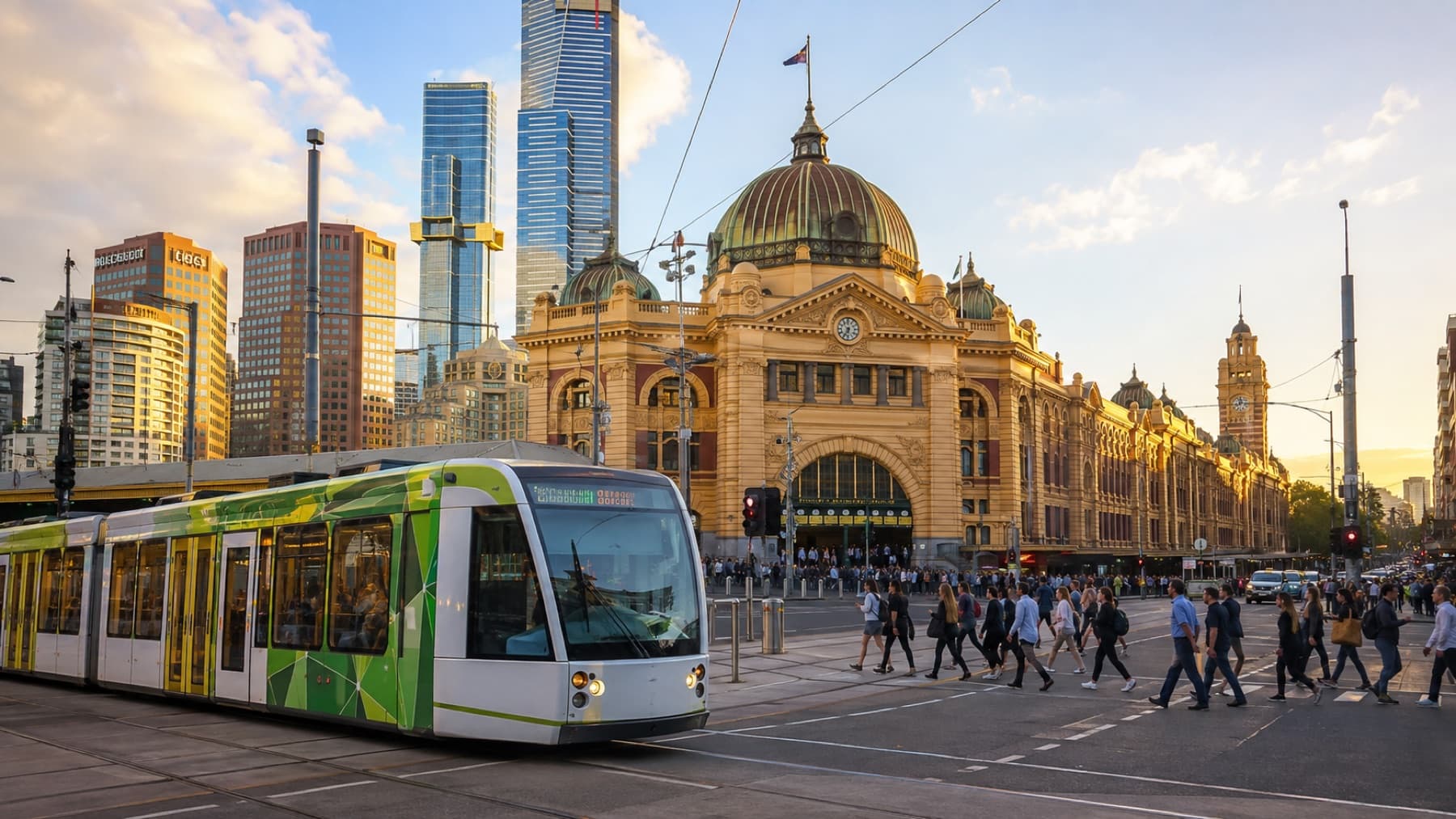
A tram passing Flinders Street Station

The parade

Friday morning, and better than it sounds.

On the Friday the two teams are paraded through the city. It is the one part of the week a visitor can walk into for free, and it is genuinely worth an hour: players on the backs of vehicles looking faintly embarrassed, four deep on the footpath, children on shoulders, entire office floors that have come in on their day off to stand in the cold.

What to expect if you go: it runs late morning, it is over quickly, and the good vantage points are taken well before it starts. Families stake out the front rows early. It is loud, extremely good-natured, and the least tribal part of the whole week — the two sets of supporters stand next to each other and heckle in the manner of people who have known each other a long time.

Do not trust anyone, including me, on the route. The parade has changed shape several times since the holiday came in — through the city streets, along the river, finishing at the ground — and the year’s course, start time and road closures are published only in the fortnight before. Check the AFL’s own site and the City of Melbourne’s what’s-on listings in that week, and if you are driving anywhere on the Friday morning, check the road closures first.

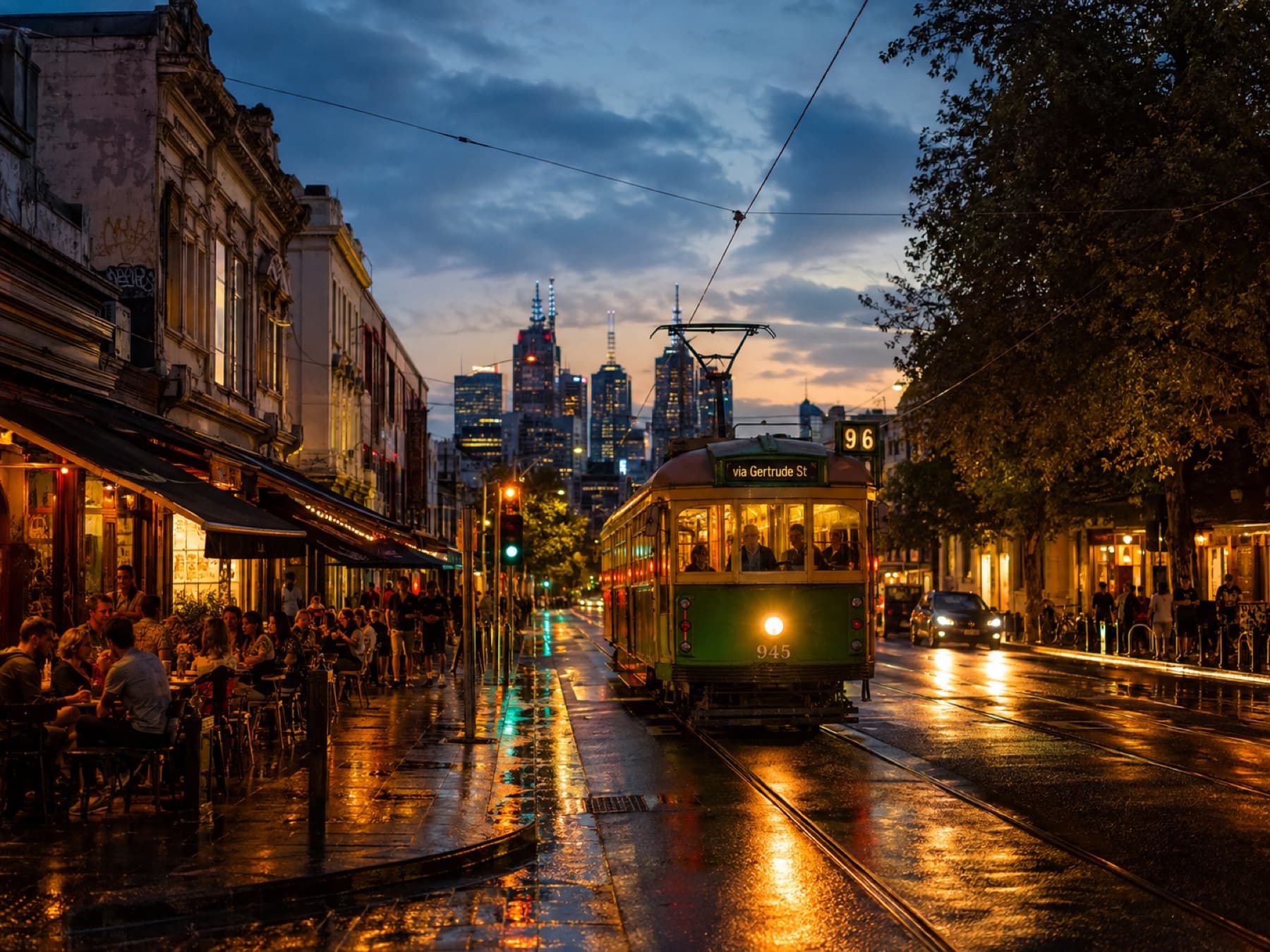
A tram on a wet street at dusk with café lights

The ticket you are not getting

This is not pessimism. It is arithmetic.

The MCG holds about a hundred thousand people, and the overwhelming majority of those seats are gone before the two teams are even known. The competition’s own members have first claim, and its membership has a waiting list measured in years. The two competing clubs get an allocation for their own members, distributed by how long they have held membership and how many games they have attended. Then come the reserved seat holders, the corporate allocation, the participating clubs, the interstate members, the media.

What is left for the general public is a genuinely small number of seats, released through a ballot in the days after the preliminary finals. Entering it is free and takes a minute. Winning it is unlikely, and the odds are not published, which tells you most of what you need to know.

The rules that matter: buy only from the AFL’s official ticketing agent. The Grand Final is a declared major event in Victoria, which means resale above a small margin over face value is against the law and tickets bought that way can be cancelled at the gate. Every year people fly in on a ticket that does not scan. Ballot dates, allocations and the public release are announced by the AFL in finals month, so check afl.com.au rather than a date you read somewhere in July.

None of this should ruin your week. Ask a Melburnian how many Grand Finals they have been to and most will say one, or none. Watching it somewhere else is the tradition.

Where people actually watch

Three options, three sets of manners.

A pub

The default, and the most fun if you do it properly. Anywhere with a screen will be full — the ones near the ground in Richmond and East Melbourne, the ones in the inner north, the ones in your own suburb. Most take bookings for the day and many run a minimum spend or a set menu; ring on the Tuesday, not the Saturday. If you have not booked, arrive well before the first bounce and expect to stand. The etiquette is simple: do not stand in front of the screen, buy a round when it is your turn, do not commentate, and when the last quarter is close, stop talking. Order at three-quarter time, not at the siren.

A live site

The city usually puts a big screen up somewhere for the crowd without a ticket, and there is often a free festival running near the ground across the week. It is the best option with children and the cheapest by a distance. Both the location and whether it is running at all change year to year, so confirm it with the City of Melbourne’s what’s-on listings or the AFL in the week itself before you walk anyone across town.

Someone’s backyard

If you get invited, go. This is the real thing: a barbecue from late morning, food that keeps appearing, three generations of the one family, and someone’s uncle who has not enjoyed a Grand Final since 1990. Bring something — beer, wine, or something for the barbecue — and arrive before the game, not during it. Find out which team the household follows before you say anything about either of them. During the last quarter, sit down and be quiet. Afterwards, be gracious in exactly the direction the room requires.

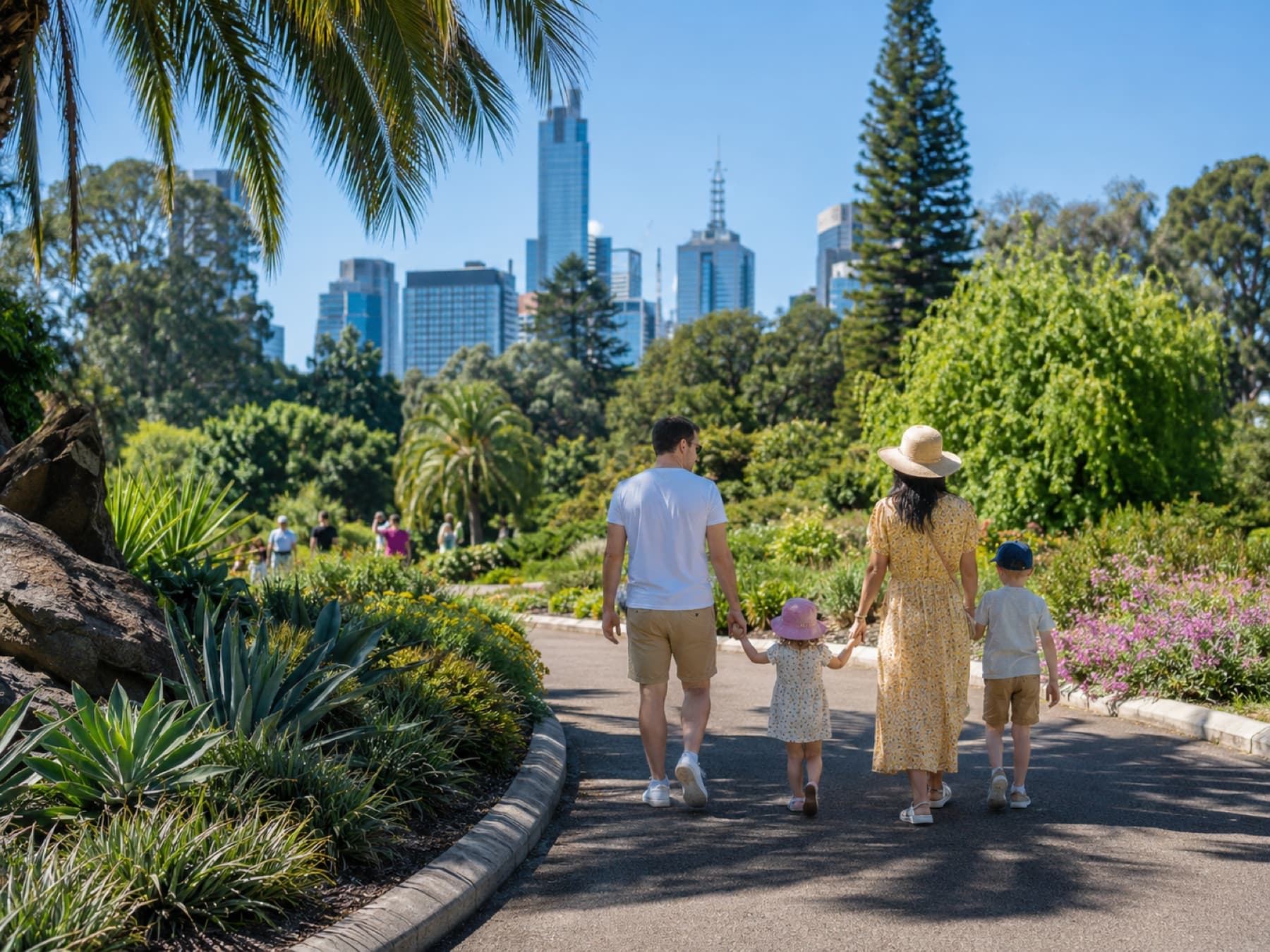
For about three hours on Saturday afternoon, Melbourne is the emptiest it gets all year.

A family strolling through the Royal Botanic Gardens
Saturday, two o’clock. Everyone else is at the football.

Five ways to spend the week if football is not your thing

Use the quiet while it lasts.

Take Saturday afternoon for yourself

The single best local tip in this guide. From the first bounce until the siren the galleries are quiet, the good restaurants have tables, the Botanic Gardens are almost empty and the beaches at Brighton and St Kilda are yours. Melbourne is never this available. Just be somewhere you want to be when it finishes.

Plan my Saturday afternoon 

Use Friday as a proper day out

It is a public holiday with almost everything open, which is rare. Do the thing that is unbearable on a normal weekend — the market early, a long lunch, the NGV, an afternoon in the arcades — and let the parade crowd have the top end of town.

Plan the Friday 

Leave the city entirely

A four-day window with a guaranteed Friday off is the best day-trip weekend of the spring. The Dandenongs, the Mornington Peninsula, the Yarra Valley or a train to Castlemaine or Bendigo all work, and the roads out are quiet on the Saturday because everyone is indoors.

Get me out of town 

Go in the other direction and enjoy it

You do not have to understand a sport to enjoy a hundred thousand people caring about it. Watch the parade, take a spot at a live site, let someone explain the rules badly, and pick a team for the afternoon. This is the cheapest cultural experience Melbourne offers all year.

Show me the football version 

Do the week’s planning on Tuesday

Tuesday and Wednesday are the only normal days in the week. Book your Friday and Saturday meals then, sort your transport, and get the busy tourist things done while the city is still behaving itself.

Sort the whole week 

Staying somewhere central this week?

Tell me where you are sleeping and what you feel like. I will keep you out of the crowd on the Friday and find you the good version of Saturday afternoon.

Plan this week 

The things nobody will tell you out loud.

It is “the G”. Nobody says Melbourne Cricket Ground. Nobody says the MCG much either. If someone tells you they are going to the G, they mean the ground in Yarra Park with the light towers.

You barrack for a team. Not root for — that word means something else here, and the mistake is a running joke. The question you will be asked, repeatedly, is “who do you barrack for?” The correct answer if you have no team is the honest one: you are visiting, you do not follow it, who should you go for? That is an invitation to a twenty-minute answer and it is how people make friends in this city.

Neutrals pick a side for the day, usually whichever club has waited longer for a win. Announcing that you support both, or neither, on the day itself is considered a bit limp. Pick one at breakfast and commit until the siren.

Football here means this game. Not soccer, which is called soccer, and not rugby, which is regarded as something that happens in Sydney. “The footy” is Australian rules unless the context says otherwise.

Do not talk about the result to someone who is recording it, and do not comfort a supporter of the losing team on the day. Say nothing. Buy them a drink. The rules of grief apply.

Getting home: Richmond, Jolimont and Flinders Street stations after the siren are the worst twenty minutes of the Melbourne year. Walk into the city and get on further down the line, or sit in a pub for half an hour and let it drain. This is what locals do, and it is why the Richmond pubs are full at six.

Skip these

  • Buying a ticket from a stranger. Resale above a small margin is illegal for this event in Victoria and the barcode is checked. Ballot or nothing.
  • Driving anywhere near the ground on Saturday. Or the city on Friday morning. The closures are real and the parking is worse.
  • Booking a restaurant for Saturday evening in the ground’s direction. Richmond, East Melbourne and the CBD east end are chaos after the siren, in a good mood, but chaos.
  • Turning up to a pub at the first bounce. An hour early is normal. At the bounce you are standing behind a pillar.
  • Assuming Friday is a shopping write-off. It is not a restricted trading day. Almost everything is open, with a surcharge.
  • Planning the week around a date you found in July. Ballot dates, the parade route, the start time and the live sites are all confirmed late. Check in the fortnight before.

Our accuracy rule

What this guide deliberately does not say.

Everything above is written to be true regardless of who plays, because at the time of writing nobody knows. The preliminary finals on the weekend before the Grand Final decide the two teams, and until then the merchandise, the flights, the pub bookings and half the city’s weekend plans are provisional.

We have not named a pub, quoted a price, given a parade route, printed a ballot date or told you what time the bounce is. Those are the five things that change every year and the five things visitors most often get wrong because a guide told them confidently. The dates we do give — the Friday public holiday, and therefore the Saturday — come from the Victorian public holiday list the rest of this site runs on.

The two other things worth checking for the year you are here: the Victorian school holidays and the Royal Melbourne Show often fall in the same fortnight, which makes the city busier again and the trains fuller during the day.

Where to check

  • Tickets, the ballot and the start time. The AFL’s own site, in finals month.
  • The parade route, road closures and live sites. The City of Melbourne’s what’s-on listings in the week before.
  • The public holiday date. Business Victoria’s public holiday page, which is where our list comes from.
  • Trains and trams on the holiday. The PTV app the night before, not the timetable on the wall.

Ask PlanSorted

Not sure what any of this means for your trip?

Tell me the days you are in Melbourne and who you are with. I will tell you what is open, what to avoid, and where to be while everyone else is watching.

Ask PlanSorted